


Where Is Raaz Actress Malini Sharma Now? From Overnight Fame to a Farm in the Sahyadris
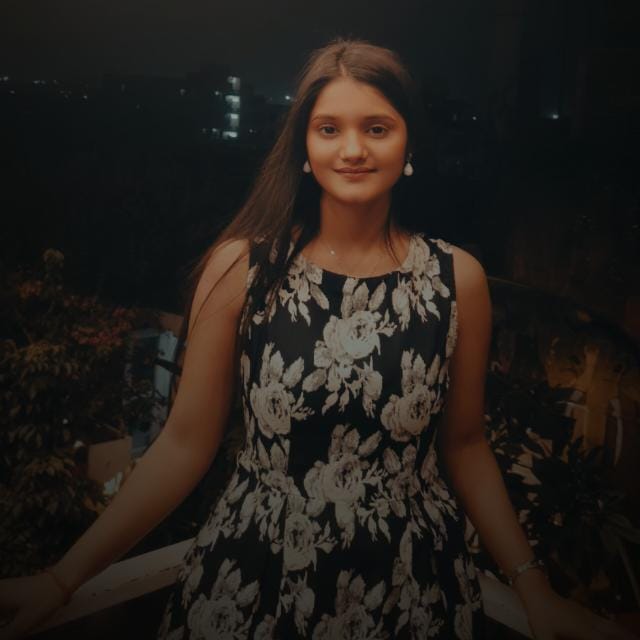

For more than two decades, Malini Sharma’s absence from Hindi cinema produced a simple narrative: the actor who played the mysterious Malini in Raaz became famous almost overnight and then disappeared.
The reality, according to Sharma herself, is considerably more interesting.
In a rare interview published by Prabhat Khabar on August 22, 2026, Sharma said the enormous attention that followed Raaz was difficult for her to process at a young age. Rather than completely abandoning cinema, she moved behind the camera and worked in art direction before motherhood and, eventually, a move away from Mumbai changed her priorities.
Today, her life bears little resemblance to the image audiences remember from the 2002 Vikram Bhatt horror film. Sharma lives amid nature near Pune, works on a farm, grows food and has been documenting that life through The Slow Local Diaries.
And after more than two decades, she has put herself in front of a camera again.
Why did Malini Sharma step away after Raaz?
The most important new detail is that Sharma has now addressed that question herself.
Speaking to Prabhat Khabar, Sharma said the attention generated by Raaz arrived faster than she was prepared to handle.
“Raaz ki success ke baad mujhe itna zyada attention milne laga,” she recalled, explaining that she was young and not mature enough to process the sudden recognition. She described herself as unprepared for that kind of “one-night success.”
Her account provides useful first-person context to a decision that was already being reported in 2002.
An archived India Today report published shortly after Raaz noted that Sharma had backed out of another film project and was interested in working behind the camera. The contemporary report described her as the “surprise” of Raaz and recorded her move towards behind-the-scenes work at precisely the point when audiences might have expected her acting career to expand.
That contemporary evidence is significant because it supports Sharma’s current recollection: her shift away from acting was not invented retrospectively after decades outside the spotlight.
She says she did not actually leave the film industry immediately
There is also an important correction to the familiar “Malini Sharma quit Bollywood after Raaz” headline.
According to Sharma’s new interview, she did not immediately sever her relationship with filmmaking. She moved into art direction and continued working behind the camera.
In other words, audiences stopped seeing her, but that was not necessarily the same thing as her instantly leaving the industry.
That distinction makes her story considerably different from the conventional narrative of an actor becoming disillusioned after one film and abruptly disappearing.
What changed first was her role within filmmaking.
Later, her priorities changed further. Sharma said motherhood became central to her life after she had children, and she devoted significant attention to raising them.
The move from Mumbai to nature came much later
Sharma’s current farm life should not be treated as something that immediately followed Raaz, either.
Her account places that transition much later.
She told Prabhat Khabar that during the COVID period, she and her partner began considering a move somewhere closer to nature. They eventually acquired land in the Pune region and built a different life there.
Current accounts of The Slow Local, Sharma’s venture, place her farmstay in the Sahyadri region roughly two hours from Pune. She grows vegetables and uses produce from the property while preparing food for guests.
The property is not simply a manicured resort surrounded by greenery. Sharma has explained through The Slow Local's social-media material that part of the land has deliberately been left as existing forest rather than being cleared or heavily altered. She refers to it as their own “little forest” and has spoken about preserving its natural habitat.
Existing trees reportedly include varieties such as arjun, harad, kokum, palash and shikakai, while Sharma has said she continues learning about the plants already growing on the land.
Growing enough food for guests is now one of her challenges
The transformation is more substantial than simply swapping Mumbai for a picturesque farmhouse.
Sharma now grows vegetables and has discussed the practical difficulty of producing enough food consistently for the people staying at the property.
Through The Slow Local, she has acknowledged that her earlier vegetable production was not as successful as she wanted it to be. More recently, yields improved enough that the challenge became maintaining sufficient produce across successive guest meals.
That is an unusually ordinary problem for someone whose most recognisable screen appearance involved playing a supernatural presence in one of the best-known Hindi horror films of the early 2000s.
But it also illustrates why describing Sharma simply as an actress who “vanished” misses much of her story. She did not spend the intervening years waiting to return to Bollywood; she built an entirely different working life.
The Slow Local began before the farmstay
The Slow Local itself did not begin as a secluded farm retreat.
Its earlier incarnation was connected to community-oriented activities in Mumbai's Versova area, including food, crafts, pop-ups, workshops and storytelling sessions for children. Products associated with the venture included homemade breads, granola, jams, peanut butter, coffee and oils.
Over time, the idea moved geographically as well as conceptually away from the city and towards the farm-based life Sharma now documents.
Current reporting also indicates that the property includes accommodation for longer stays, while Sharma continues other professional work alongside running the farm.
The through-line is less about celebrity reinvention and more about building a lifestyle centred on food, nature, community and slower living.
Malini Sharma faces the camera again after Raaz
The most striking connection between Sharma's two lives comes through The Slow Local Diaries.
Launching the video diary, Sharma acknowledged exactly why seeing her on camera again would attract attention.
She introduced herself and said she was facing a camera again 23 years after Raaz, before addressing those who had wondered where she had gone.
“I am alive. I am here,” she said while introducing The Slow Local Diaries.
The accompanying post similarly described the experience as facing the camera after a very long time except now without makeup or scripted dialogue and with the intention of presenting herself rather than playing a character.
There was even a deliberate connection to her film past: material from Raaz accompanied the video, acknowledging rather than erasing the role through which millions of viewers remember her.
Before Raaz, there were music videos and television
Sharma’s public career had begun well before Raaz.
She was already recognisable from the Indian pop-music-video boom, including an appearance in Bombay Vikings’ “Kya Soorat Hai”. She also appeared in material associated with Mika Singh's “Saawan Mein Lag Gayi Aag” and acted in the television series CATS.
But Raaz changed the scale of that recognition.
Directed by Vikram Bhatt, the 2002 supernatural thriller starred Bipasha Basu and Dino Morea, with Sharma playing the mysterious Malini. Her character was integral to the supernatural mystery at the centre of the story, and she was prominently featured in “Aapke Pyaar Mein,” one of the film's songs.
The film's visibility created the very opportunity that could have propelled her further as an actor. Instead, it became the point at which Sharma realised that the kind of attention accompanying screen fame was not something she was ready to pursue in the same way.
An important correction to the ‘disappeared actress’ narrative
There is a tendency in celebrity coverage to describe performers who leave mainstream visibility as having “vanished,” particularly when they stop giving interviews.
Sharma's story demonstrates the limitation of that language.
She was not frozen in time after Raaz. Contemporary reporting from 2002 already documented her interest in moving behind the camera. Her latest interview says she subsequently worked in art direction. Motherhood then became a priority, and the COVID period eventually prompted another major shift towards life closer to nature.
Her life today is therefore not best understood as a dramatic rejection of her former career.
It is the result of several transitions spread across more than two decades.
Even Sharma appears amused by the idea that she was somehow missing all those years. In her recent interview, she said she finds it surprising that people still remember her and are finding her online 23 years later.
The Celebrity Hour Take
Malini Sharma's story becomes much more compelling once the word “disappeared” is removed from it.
The conventional version has an irresistible Bollywood shape: an actor becomes famous through one blockbuster, walks away at the height of attention and is finally “found” decades later living in a forest.
The evidence shows a more human trajectory.
Sharma did struggle with the sudden attention generated by Raaz. But an India Today report from 2002 already documented her desire to work behind the camera, and she now says she subsequently worked in art direction. Later came motherhood. The farm and nature-focused life arrived much further down the timeline.
That chronology matters.
Her story is not really about somebody abandoning success. It is about somebody repeatedly redefining what useful work and a satisfying life looked like to her.
There is also something fitting about The Slow Local Diaries becoming her route back to the camera. Twenty-three years ago, audiences saw Sharma through a character, costumes, dialogue, music and the machinery of a major Hindi film. Now she is choosing what the camera records: growing food, cooking, maintaining land and navigating everyday life.
It may not be a Bollywood comeback at all.
It is simply Malini Sharma reclaiming the camera on very different terms.
Sources & Verification
This report was built around Malini Sharma's August 2026 interview with Prabhat Khabar, in which she directly discussed the attention following Raaz, her shift into art direction, motherhood and her later move towards farming near Pune. That account was checked against an archived India Today report from April 2002, which independently establishes that Sharma was already considering behind-the-camera work immediately after Raaz.
Information about her current life, The Slow Local, its farmstay and The Slow Local Diaries was cross-checked against Sharma's social-media material as embedded or directly attributed in current coverage and against multiple independent reports.
The article deliberately avoids presenting every detail attached to Sharma in recent viral coverage as established fact. In particular, the timeline has been reconstructed so that her move to farm life is not misleadingly presented as something that happened immediately after Raaz.


Comments