


Neena Gupta: The Life, Struggles and Second-Innings Success of a National Award-Winning Actor
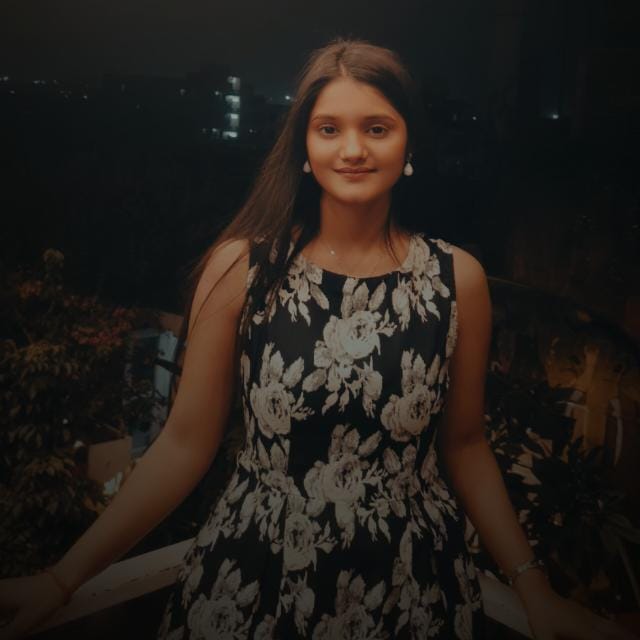

Neena Gupta's career is unusual even by the standards of Indian cinema. She moved from Delhi theatre to the National School of Drama, entered films at a time when mainstream Hindi cinema offered limited space to actors who did not fit the conventional leading-lady mould, built a parallel career in television as an actor, writer and director, became a single mother in the public eye, and eventually returned to mainstream prominence decades after her early work.
Her story is not simply that of a veteran actor who made a successful comeback. It is a story of reinvention.
From films such as Gandhi, Mandi and Jaane Bhi Do Yaaro to television's Saans, and later Badhaai Ho, Panchayat and Uunchai, Gupta has repeatedly moved between mainstream entertainment and character-driven storytelling.
Her autobiography, Sach Kahun Toh, published by Penguin Random House India in 2021, provides perhaps the most comprehensive account of that journey—from her childhood and education to theatre, Mumbai, motherhood, professional struggles and her later career resurgence.
Early Life and Education
Neena Gupta was born in 1959 in Kolkata and grew up in Delhi. Her formative years in the capital would eventually lead her towards theatre and acting.
She studied at Delhi University and pursued higher education in Sanskrit, eventually completing an M.Phil. Her academic background is notable because acting was not initially the only direction in which her life appeared to be heading.
While studying in Delhi, she became increasingly involved with theatre. That interest eventually led her to the National School of Drama (NSD), where she trained as an actor.
Her time in theatre was important because it gave her a foundation that would later distinguish her performances in both art-house cinema and television. Penguin Random House describes her early career as beginning in Delhi's theatre scene before she moved towards film and television in the 1980s.
Entry Into Films
Gupta's early film career began in the early 1980s.
One of her earliest significant screen appearances came in Richard Attenborough's 1982 film Gandhi. She subsequently became associated with India's parallel and art-house cinema movement, working with filmmakers whose films were often driven by social themes and characterisation rather than conventional commercial formulas.
Her early filmography included Kundan Shah's Jaane Bhi Do Yaaro and Shyam Benegal's Mandi, two films that have since acquired an important place in Hindi cinema history.
She also appeared in films including Trikal, Rihaee and Suraj Ka Satvan Ghoda. These projects established Gupta as an actor capable of handling complex supporting and character roles.
The Parallel Cinema Years
The 1980s were an important period for Gupta, but they were not necessarily the straightforward path to stardom that a young actor might hope for.
She worked with filmmakers such as Shyam Benegal and Kundan Shah and shared screen space with actors including Naseeruddin Shah, Om Puri, Smita Patil and other leading performers of India's parallel cinema movement.
Yet recognition as a serious actor did not automatically translate into a large number of conventional leading roles.
In her memoir, Gupta looks back at this period with considerable self-awareness, including her frustration at not receiving the kind of opportunities she believed she was capable of handling.
That gap between ability and opportunity became one of the recurring themes of her career.
National Award for Woh Chokri
One of the major early milestones came with Subhankar Ghosh's Woh Chokri.
Gupta won the National Film Award for Best Supporting Actress for her performance in the film. The official National Film Awards citation praised her portrayal for its realistic depiction of a loving mother and a betrayed wife, including the conflicting emotions of love, hate and anxiety.
The award was significant because it formally recognised the strength of her acting at a time when she was still primarily associated with character-driven cinema rather than mainstream stardom.
Her National Award-winning performance remains one of the most important early achievements of her career.
Neena Gupta and Television
Television became an equally important part of Gupta's professional identity.
She appeared in popular programmes including Khandaan, Mirza Ghalib and Bharat Ek Khoj, establishing herself with audiences beyond the art-house film circuit.
But Gupta did not remain only an actor on television.
She moved behind the camera as well, writing, directing and producing television projects.
One of the most important examples was Saans, which she wrote and directed and in which she also acted. The series, which premiered in the late 1990s, dealt with relationships and marriage from the perspective of its central women characters.
Her television career demonstrated something that would later become central to her professional identity: Gupta was interested not only in performing but also in creating and shaping stories.
National Recognition as a Director
Gupta's work behind the camera also earned national recognition.
Her non-feature film Bazar Sitaram won the National Film Award for Best First Non-Feature Film of a Director. The National Film Awards record credits Gupta as both producer for Films Division and director.
The award is an important but sometimes overlooked part of her biography.
Gupta is therefore not simply a National Award-winning actor. Her career has also included formally recognised work as a filmmaker.
The Famous Khalnayak Chapter
In 1993, Gupta appeared in Khalnayak , the Subhash Ghai-directed film starring Sanjay Dutt and Madhuri Dixit.
She became particularly memorable for her appearance in the popular song “Choli Ke Peeche”, which became one of the most discussed songs of the period.
Gupta later wrote about the experience in Sach Kahun Toh, including the circumstances that led her to accept the part despite initially being reluctant because it was essentially a song appearance and a brief role.
The song became a major part of popular culture and remains one of the most recognisable moments associated with her commercial-film career.
Personal Life and Motherhood
Neena Gupta's personal life became a major subject of public discussion, sometimes overshadowing her professional work.
Her relationship with former West Indies cricketer Vivian Richards resulted in the birth of her daughter, Masaba Gupta, in 1989.
Gupta raised Masaba as a single mother and has spoken extensively about the experience, both in interviews and in her autobiography.
Importantly, Gupta has repeatedly discussed this period in her own terms rather than allowing it to remain simply a tabloid story.
In interviews around the publication of Sach Kahun Toh, she spoke about the practical difficulties of raising a child alone and the special bond that developed between her and Masaba.
More recently, Gupta has also reflected on her choices as a young woman and acknowledged that some decisions had consequences for both herself and her daughter.
Sach Kahun Toh: Neena Gupta Tells Her Own Story
In 2021, Gupta published her autobiography Sach Kahun Toh .
The memoir covers her childhood in Delhi, education, National School of Drama years, move to Bombay, professional struggles, pregnancy, single motherhood and eventual career resurgence.
Penguin Random House describes the book as an account of her personal and professional journey, including the choices she made and the stereotypes she faced.
The memoir was particularly important because Gupta had spent decades being discussed publicly through other people's interpretations of her life.
Writing her own story allowed her to determine what belonged in the narrative and what did not.
The Instagram Post That Changed Her Career
Perhaps the most important turning point of Gupta's later career came through an unusually direct social-media post.
After years of finding it difficult to secure the kind of roles she wanted, Gupta publicly said that she was in Mumbai and looking for good acting work.
The post attracted attention from filmmakers and eventually led to new opportunities.
Gupta has subsequently spoken about how that moment changed the trajectory of her career. Her autobiography and later interviews describe the period as a turning point after years in which she struggled to find substantial roles.
The story is significant because it shows that her second innings did not arrive simply because the industry suddenly discovered her talent. She actively asked for the opportunity.
Badhaai Ho and the Second Innings
The film that transformed Gupta's mainstream career was Badhaai Ho (2018).
Directed by Amit Sharma, the film cast Gupta as a middle-aged woman whose unexpected pregnancy becomes the centre of an unusual family comedy-drama.
The role was both commercially accessible and dramatically substantial.
For Gupta, it became the kind of opportunity she had been seeking for years: a central character written for a mature woman rather than a conventional supporting role.
She received widespread recognition for the performance, including the Filmfare Award for Best Actress (Critics).
The success of Badhaai Ho fundamentally altered how the industry viewed her.
Instead of being primarily remembered as an actor from parallel cinema and television, Gupta became a sought-after performer for contemporary Hindi films and streaming projects.
Panchayat and the OTT Era
Gupta's second innings expanded further through streaming.
She became part of the ensemble of Panchayat , the widely watched Hindi series created by TVF, playing Manju Devi.
The role introduced her to a younger streaming audience while allowing her to combine comedy, restraint and emotional depth.
Her work in OTT projects became another demonstration of her adaptability.
Rather than attempting to recreate the roles of her youth, Gupta increasingly chose characters appropriate to her age and experience.
That has become one of the defining features of her later career.
Uunchai and Another National Award
Gupta's second innings also produced another major national recognition.
For her performance in Sooraj Barjatya's Uunchai (2022), she won the National Film Award for Best Supporting Actress at the 70th National Film Awards.
The award meant that Gupta had now received the National Film Award for acting decades after her first win for Woh Chokri.
Her performance in Uunchai reinforced the idea that her late-career success was not merely a nostalgia-driven comeback.
She was continuing to receive major recognition for contemporary performances.
Neena Gupta in 2026
Gupta remains active in film and streaming.
In 2026, she joined the ensemble cast of Netflix's Chumbak , a comedy series created by Aatish Kapadia and Jamnadas “JD” Majethia.
Netflix describes the series as a story about five families living in the same neighbourhood, with Gupta playing Rajni, one of the central characters.
The series premiered on Netflix in September 2026 and features an ensemble cast including Deven Bhojani, Manasi Parekh, Sumeet Vyas, Arjun Bijlani and others.
Her involvement with Chumbak illustrates how her career has continued to evolve: from stage and parallel cinema to television, mainstream film, OTT and contemporary ensemble comedy.
Neena Gupta's Acting Style and Career Legacy
What makes Gupta's career particularly distinctive is the variety of spaces she has occupied.
She has been:
A theatre actor trained at NSD
A performer in parallel cinema
A mainstream Hindi-film actor
A television actor
A television writer and director
A producer
A National Award-winning filmmaker
A National Award-winning actor
An author
A prominent performer in the modern OTT era
Her career also reflects the changing opportunities available to women in Indian entertainment.
When she began working, mature female characters were often limited in mainstream cinema. Her later success demonstrated that audiences would respond strongly when older women were given substantial, complex roles.
Neena Gupta and the Idea of a “Second Innings”
The phrase “second innings” is frequently used when discussing Gupta, but it only tells part of the story.
Calling Badhaai Ho a comeback can unintentionally reduce everything that came before it.
She had already built a substantial career across cinema and television. She had won a National Award, directed television, made an award-winning non-feature film and worked with some of India's most respected filmmakers.
What changed after Badhaai Ho was not her ability.
What changed was the scale and visibility of the opportunities being offered to her.
That distinction is important when assessing her legacy.
Neena Gupta and Masaba Gupta
Gupta's relationship with daughter Masaba Gupta, now a fashion designer, actor and entrepreneur, has also become an important part of her public story.
The two have worked together on the Netflix series Masaba Masaba, which drew on elements of their real-life relationship while presenting a fictionalised version of their lives.
Gupta has often spoken warmly about Masaba and has described their relationship as unusually close because of the circumstances in which she raised her.
At the same time, she has not presented motherhood as an uncomplicated experience. Her interviews and memoir include reflections on the difficulties, responsibilities and regrets associated with raising a child alone.
What Makes Neena Gupta's Story Different
Neena Gupta's biography cannot be reduced to a story about overcoming hardship.
There were periods when she succeeded, periods when she struggled and periods when she had to change direction completely.
She moved from theatre to cinema, from cinema to television, from acting to directing and producing, and later from being overlooked for mainstream roles to becoming one of the most recognisable mature actors in contemporary Hindi entertainment.
The defining quality throughout has been her willingness to acknowledge both ambition and vulnerability.
She has openly discussed professional jealousy, missed opportunities, relationships, motherhood, ageing and the difficulty of finding work.
That honesty has become almost as important to her public identity as her acting.
The Celebrity Hour Take
Neena Gupta's greatest career achievement may not be any single film or award.
It is the fact that she has managed to reinvent the meaning of success several times.
Her early career was built around serious cinema and theatre. Television gave her greater visibility and allowed her to become a creator as well as an actor. Personal circumstances changed the direction of her life. Years of limited film opportunities followed.
Then came the second innings.
But the real significance of Badhaai Ho, Panchayat, Uunchai and her subsequent work is that they did not erase her earlier career. They placed a new audience alongside the one that had known her from Mandi, Jaane Bhi Do Yaaro, Trikal and television.
That makes Gupta's journey particularly relevant to the current Indian entertainment industry.
Her career demonstrates that an actor's most important chapter does not necessarily have to arrive in their twenties or thirties.
Sometimes, the most meaningful phase begins when the industry finally starts writing roles for the person the actor has become.
Neena Gupta: Biography at a Glance
Name: Neena Gupta
Born: 1959, Kolkata, India
Profession: Actor, filmmaker, television director and producer, author
Education: Delhi University; National School of Drama
Major early films: Gandhi, Jaane Bhi Do Yaaro, Mandi, Trikal, Rihaee
Major television work: Khandaan, Mirza Ghalib, Bharat Ek Khoj, Saans
National Award-winning acting: Woh Chokri, Uunchai
National Award-winning directing: Bazar Sitaram
Major career resurgence: Badhaai Ho (2018)
Major OTT work: Panchayat, Masaba Masaba, Chumbak
Autobiography: Sach Kahun Toh (2021)
Daughter: Masaba Gupta
Gupta's career continues to evolve, but the larger story is already clear: she is one of the rare Indian performers whose professional life has crossed several generations of cinema and television without being confined to a single era or genre.
Sources & Verification
This The Celebrity Hour biography was independently researched using Neena Gupta's own autobiography, publisher material from Penguin Random House India, National Film Award records and established interviews and archival coverage. Her memoir was used as an important first-person source for her childhood, education, theatre journey, professional struggles, motherhood and career decisions.
The career chronology was cross-checked with established coverage of her film and television work, while her National Award achievements were checked against National Film Award records and contemporary reporting. The official National Film Award catalogue confirms her Best Supporting Actress award for Woh Chokri, while contemporary National Film Award coverage confirms her second acting win for Uunchai.
For her current career, Netflix's official material was used to verify her role in the 2026 series Chumbak.
Personal-life details have been included only where they are publicly documented by Gupta herself or established sources. The article does not treat tabloid speculation as biography.


Comments