


‘He Was a Man of Honour’: Pradeep Rawat’s Son Vikramaditya Vows to Carry His Father’s Legacy Forward
Updated: Aug 21

Pradeep Rawat spent decades convincing audiences that he could be terrifying.
For his son Vikramaditya Singh Rawat, however, the actor's real legacy has little to do with the villains that made him famous.
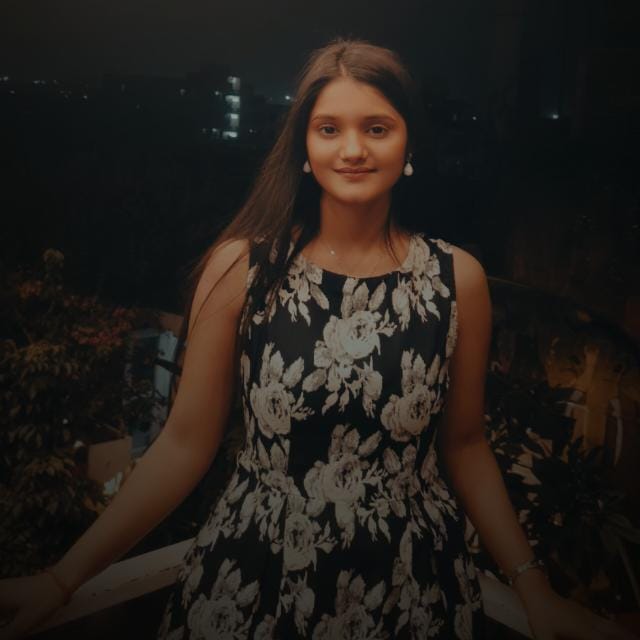
Days after the veteran actor's death at 74, Vikramaditya spoke publicly at his father's prayer meet in Mumbai, struggling to hold back tears as he remembered him not first as the antagonist of Ghajini, Deva from Lagaan or Ashwatthama from Mahabharat, but as a father defined by honour and respect.
Speaking to news agency ANI, Vikramaditya described his father as a man whose example he hopes to carry into his own life. He also made a promise: he wants to take Pradeep Rawat's legacy forward — and make it even bigger.
The tribute arrived at the end of an extraordinarily difficult period for the family. Pradeep Rawat died on August 4 after his cancer returned, with his manager saying the actor had been hospitalised for about a month before his condition deteriorated.
Yet the prayer meet also became something larger than a farewell.
Through his son's words and the recollections of colleagues, it offered a glimpse of the man behind a screen image built largely around intimidation.
‘No matter how many words I speak, they will always be less’
Vikramaditya's tribute was deeply personal.
Speaking to ANI at the prayer meet, he said that however much he spoke about his father, the words would never feel sufficient.
He described Pradeep as a man of “honour and respect” and said that if he were ever asked what kind of father he wanted, he would choose his own father again.
That is perhaps the most meaningful contrast in Pradeep Rawat's story.
Millions of viewers knew the imposing physique, stare and voice that made him such an effective antagonist.
His son's memories describe something audiences couldn't see on screen.
And Vikramaditya isn't speaking about that relationship only in the past tense. He has framed his father's life as something he now feels responsible for carrying forward.
His stated ambition is not merely to preserve Pradeep's name, but to build upon it.
Vikramaditya also spoke about how quickly his father became ill
The family's grief was intensified by how rapidly Pradeep's condition deteriorated.
Vikramaditya has said that approximately two months before his father's death, Pradeep began experiencing persistent hiccups. The family initially believed the problem could be connected to a comparatively minor infection.
His condition subsequently became much more serious.
Pradeep's manager, Siddharth Tiwari, separately confirmed that the actor had previously survived cancer but suffered a relapse during the final phase of his life.
Tiwari told ETimes that Pradeep had been hospitalised for around a month and that his platelet count eventually dropped sharply. He confirmed that the actor died on August 4, at approximately 6 to 6.30 pm.
Hindustan Times independently reported Tiwari's confirmation that the cancer had relapsed and that Pradeep had been in hospital for more than a month.
That distinction is important editorially.
Details of Pradeep's final illness should be attributed either to his family or manager rather than presented as independent medical findings.
A father’s legacy and an actor’s legacy
What exactly is the legacy Vikramaditya has promised to carry forward?
For audiences, the answer spans several different eras of Indian entertainment.
Pradeep became widely recognised through his portrayal of Ashwatthama in B.R. Chopra's Mahabharat before establishing a substantial film career.
He later appeared as Deva Singh Sodhi in Ashutosh Gowariker's Lagaan, giving audiences a markedly different character from many of the villains with whom he would eventually become associated.
Then came a period in South Indian cinema that transformed his screen identity again.
His antagonist in S.S. Rajamouli's Sye helped establish him as a formidable presence in Telugu cinema, while Ghajini made that image even more recognisable. He appeared as the antagonist in both the 2005 Tamil film starring Suriya and its 2008 Hindi adaptation starring Aamir Khan.
The remarkable part of that career wasn't simply longevity.
It was portability.
Pradeep could move between Hindi television, Bollywood and South Indian industries while retaining the physical authority that made him instantly recognisable.
Aamir Khan’s tribute explains why Ghajini mattered
Perhaps the strongest assessment of Pradeep's screen legacy came from Aamir Khan.
The two actors had worked together across Sarfarosh, Lagaan and Ghajini. Following Pradeep's death, Aamir described his colleague as an extremely dedicated and fearless performer.
Speaking to Variety India, Aamir argued that Pradeep's portrayal of the title antagonist was essential to Ghajini, calling the character one of Indian cinema's striking screen villains and saying the film would not have worked without him.
Aamir also singled out Pradeep's Lagaan performance.
As Deva Singh Sodhi, Pradeep played the former Sikh soldier who joins Bhuvan's cricket team — a character far removed from the brutal antagonist audiences later associated with Ghajini.
Aamir remembered the individuality Pradeep brought to Deva and praised his versatility.
That assessment is useful because it pushes Pradeep's legacy beyond the convenient label of “Bollywood villain.”
His villains may have been the easiest performances to remember.
They weren't the full measure of his ability.
Pradeep Rawat also helped Ghajini reach Aamir Khan
There is another fascinating piece of Ghajini history that makes Aamir's tribute particularly poignant.
Pradeep wasn't simply the actor who eventually faced Aamir on screen.
He had previously described playing a role in bringing the project to him.
In a 2024 interview with Siddharth Kannan, later recounted by The Indian Express, Pradeep said director A.R. Murugadoss wanted to remake the successful Tamil film in Hindi and asked him to approach major Hindi-film stars.
Pradeep believed Aamir was particularly well suited to the project and repeatedly encouraged him to watch the Tamil original.
According to Pradeep's account, Aamir eventually watched the film after months of persuasion and decided to do the remake.
That gives Aamir's 2026 statement — that Ghajini wouldn't have worked without Pradeep — another layer.
Pradeep's importance to the film extended beyond what audiences ultimately saw on screen.
His colleagues remembered the actor behind the intimidating image
Vikramaditya wasn't alone in remembering Pradeep at the prayer meet.
ANI's account reported that actors including Raghubir Yadav and Mukesh Rishi paid tribute, with Rishi recalling a professional association that went back to Sarfarosh.
Other industry figures were also photographed or reported at the gathering.
The attendance reflected the breadth of relationships built across a career lasting more than four decades.
It also reinforces something that can disappear when an actor becomes closely associated with antagonistic roles: screen persona and personal reputation are not the same thing.
Pradeep made a career out of convincing audiences to distrust him.
The people remembering him after his death were describing loyalty, professionalism and friendship.
Salman Khan also remembered their time together
Salman Khan was among the industry figures who publicly mourned Pradeep.
He shared a photograph of the two and remembered the good moments they had shared before wishing his former colleague peace.
The tributes from Salman and Aamir are notable for different reasons.
Aamir's focused heavily on Pradeep the performer — his fearlessness, versatility and importance to Ghajini.
Vikramaditya's focused on Pradeep the father.
Together, they provide a more complete picture than simply listing his filmography.
His final years kept him connected to cinema
Pradeep's career did not end with the roles most audiences associate with the 2000s.
His later filmography continued across industries, and contemporary tributes noted his appearance in Chhaava, extending a screen career that had already crossed four decades.
That longevity is significant for an actor who was rarely positioned as a conventional leading man.
Character actors often build careers differently.
Their longevity depends not on repeatedly opening films under their own name, but on being able to inhabit enough different worlds that filmmakers continue finding reasons to cast them.
Pradeep managed precisely that.
Vikramaditya’s promise changes the meaning of the farewell
The most forward-looking moment from the prayer meet came when Vikramaditya spoke about what happens next.
He said he intended to follow his father's legacy and make it larger, expressing faith that he would one day make Pradeep proud.
What form that ambition will take should not be assumed.
The available material does not establish a specific film project, acting debut or professional announcement from Vikramaditya connected to the statement.
For now, it is best understood exactly as he presented it: a son's promise to honour the name his father spent decades building.
Anything more specific would be speculation.
The Celebrity Hour Take
Pradeep Rawat's career contains one of acting's great contradictions.
Success meant making audiences dislike him.
The more frightening the villain became, the better he had done his job.
For viewers who first encountered him as Ashwatthama, Deva Singh Sodhi or Ghajini, Pradeep existed through characters much larger than ordinary life. His height, physical presence and controlled aggression made him especially valuable to filmmakers looking for an antagonist who could feel like a genuine threat to the hero.
But after his death, a very different vocabulary emerged.
Aamir Khan remembered fearlessness and dedication.
Colleagues remembered the actor they had known across decades.
And his son remembered honour and respect.
That is why Vikramaditya's tribute adds something a career retrospective alone cannot.
Filmographies tell us what an actor leaves on screen.
Families tell us what remains after the screen goes dark.
Pradeep Rawat leaves both.
His characters survive in Mahabharat, Lagaan, Sye, Ghajini and dozens of other films across languages.
But the legacy his son has promised to carry forward is clearly more personal than any one performance.
For Vikramaditya, Pradeep Rawat wasn't Indian cinema's intimidating villain.
He was the father he says he would choose all over again.
Sources & Verification
This report was independently prepared using ANI-sourced coverage of Vikramaditya Singh Rawat's remarks at the prayer meet, separate reporting containing direct confirmation from Pradeep Rawat's manager Siddharth Tiwari, Vikramaditya's earlier account of his father's final illness, and published tributes from colleagues including Aamir Khan. The article distinguishes the family's account of Pradeep's illness from independently established medical facts and does not infer a specific professional plan from Vikramaditya's promise to carry forward his father's legacy.


Comments