


Filmmaker Shakeel Noorani Arrested After Actor Alleges Rape and Blackmail; Lawyer Denies Charges

Updated: Aug 22
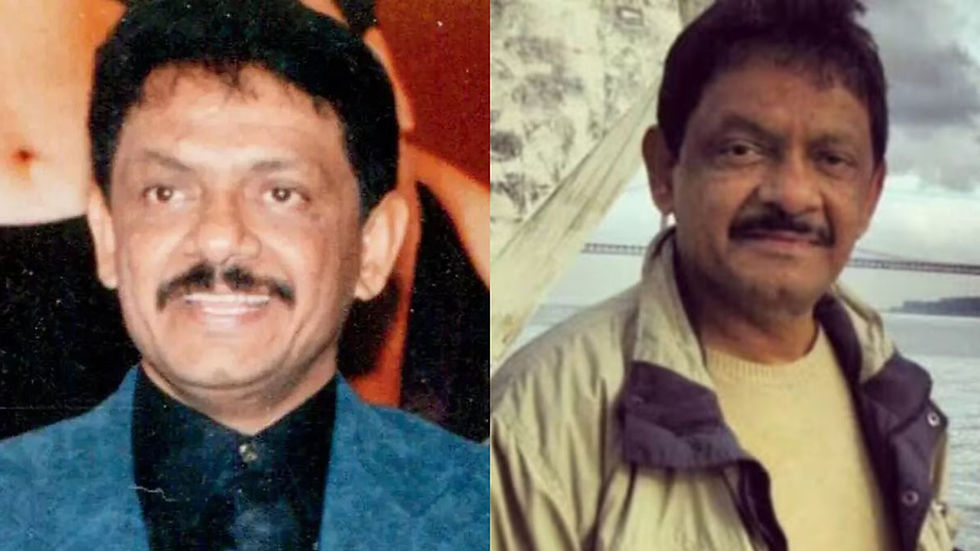
Filmmaker Shakeel Noorani has been arrested by Mumbai Police after a 33-year-old aspiring actor accused him of repeated sexual assault, intimidation and other serious offences.
The 73-year-old producer-director was traced to a farmhouse in Maharashtra after police said he had gone into hiding following the registration of an FIR. He was brought to Mumbai, arrested and produced before a local court, which remanded him to police custody until August 12.
Noorani, known for films including Bade Dilwala and the Govinda-starrer Joru Ka Ghulam, has not been convicted of any offence in the case. His lawyer has denied the allegations and said the filmmaker has been falsely implicated.
That distinction is essential. The claims described below come from the complainant’s statement and police case as reported by established news organisations; they remain allegations subject to investigation and judicial scrutiny.
What has Mumbai Police confirmed?
According to Mumbai Police officials quoted by PTI, Noorani was arrested after a 33-year-old aspiring actor accused him of raping and threatening her.
Police said he was traced to his farmhouse in Mahabaleshwar, more than 200 kilometres from Mumbai, after the FIR was registered and he could not initially be located.
The Times of India reported that police used technical inputs to trace him to a farmhouse in the Satara district, after an earlier search at his son’s residence in Mumbai did not locate him.
Following his arrest, Noorani was produced before court and remanded to police custody until August 12.
What does the complainant allege?
According to police accounts of the complaint, the woman alleged that Noorani called her to his Malvani residence on the pretext of discussing a film script or potential project.
She alleged that her drink was spiked and that she was sexually assaulted after losing consciousness. She further alleged that Noorani later showed her an intimate video and threatened to circulate it if she approached police or told her family.
The complainant also alleged that the purported recording was subsequently used to intimidate her and that she was sexually assaulted on multiple occasions over a period of years.
These are allegations contained in the complaint. They should not be written as though a court has found them proved.
The case includes additional serious allegations
Police have also invoked provisions relating to causing hurt by poison, criminal intimidation and causing miscarriage.
The complainant alleged that she was given contraceptive pills after some of the alleged assaults and later poisoned, which she says resulted in a miscarriage.
Again, those claims are part of the complainant’s case and remain to be tested during investigation and any subsequent court proceedings.
Which BNS sections have been invoked?
Police registered the case under multiple sections of the Bharatiya Nyaya Sanhita.
Contemporary police reporting identifies:
Section 64(2)(m) - rape under aggravated circumstances;
Section 123 - causing hurt by means of poison or similar substance;
Section 351(2) - criminal intimidation;
Section 88 - causing miscarriage.
For a publication like The Celebrity Hour, it is better to state that these are the sections police have invoked rather than translating them into a declaration that the offences occurred.
Charges in an FIR or arrest do not themselves establish guilt.
The complaint was filed weeks before the arrest
Police said the complaint had been lodged roughly 40 days before Noorani’s arrest.
According to investigators quoted by The Times of India, Noorani went into hiding after the case was registered. Officers searched for him and later located him at the farmhouse using technical assistance.
That chronology is relevant because it explains why the arrest occurred weeks after the FIR rather than immediately.
It does not by itself establish why Noorani was unavailable or what legal position his defence will take regarding that period.
Noorani’s lawyer denies the allegations
The defence position should be given comparable clarity.
Noorani’s lawyer, Vikas Singh Goar, told The Times of India that the filmmaker had been falsely implicated.
He also stressed that the allegations had not yet been established before a court and that the investigation was continuing.
That defence matters because this is an active criminal case, not a concluded judicial finding.
An accurate headline therefore needs words such as “alleges,” “accused,” “case” or “complaint” rather than presenting the accusations as proven conduct.
Who is Shakeel Noorani?
Noorani has worked in Hindi cinema as a writer, producer and director.
His credits include Vishnu Devaa (1991), Shreeman Aashique (1993), Bade Dilwala (1999) and Joru Ka Ghulam (2000).
That career background explains why the arrest has drawn entertainment-media attention, but it should remain secondary to the legal reporting.
This is not primarily a filmography story.
It is an ongoing criminal investigation involving serious allegations and a named accused who denies them.
Why the wording matters
Cases involving allegations of sexual violence require especially careful language.
There are several different facts that should not be collapsed into one another:
The arrest is confirmed.
The FIR is confirmed.
The sections invoked by police are confirmed.
The woman’s allegations are allegations.
The defence denial is also confirmed as a statement by Noorani’s lawyer.
Guilt has not been established.
That structure is not just legally safer; it is more accurate journalism.
The attached editorial brief specifically instructs that reports, allegations and attributed claims must not be converted into established fact.
The Celebrity Hour Take
The most important editorial responsibility in this story is restraint.
The allegations are extremely serious.
That does not create permission to write more dramatically than the verified record supports.
Entertainment journalism sometimes treats an arrest as the conclusion of a story because it produces a strong headline. Legally and journalistically, an arrest is usually an early stage.
Police have a complaint.
They have registered an FIR.
They have arrested Noorani.
A court remanded him to custody.
His lawyer disputes the allegations.
The investigation continues.
Those are the facts that can responsibly be stated.
The disturbing details contained in the complaint are relevant because they explain the nature of the case and the sections police invoked. But repeating them in sensational language would add little reader value and risk presenting allegations as adjudicated truth.
The stronger article therefore does not ask readers to decide the case.
It tells them clearly what police say happened, what the complainant alleges, what the defence says, and what remains unresolved.
That is especially important when covering a criminal accusation involving a public figure.
Sources & Verification
This report was independently prepared from PTI reporting based on Mumbai Police officials, detailed Mumbai crime reporting from The Times of India and Mid-day, and secondary coverage documenting Noorani’s arrest, court remand and defence response. The allegations are attributed to the complainant or police case throughout rather than presented as proven facts. Noorani’s lawyer’s denial is included because the matter remains under investigation.


Comments