


From Best Director to a New Venice Competition: Anuparna Roy’s Next Chapter
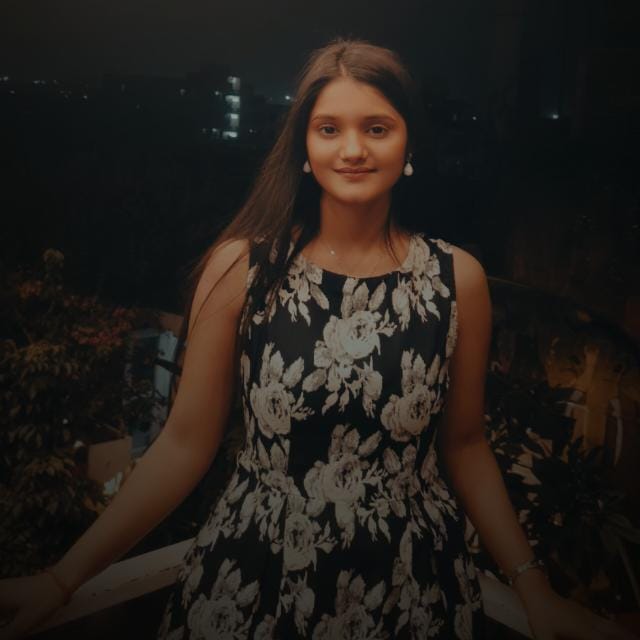

Anuparna Roy has returned to the Venice International Film Festival with Lovers in the Blue Night, a Hindi-language feature selected for the Orizzonti competition at the 83rd edition of the festival. The film marks Roy’s second consecutive appearance in the section, following her historic Best Director win for Songs of Forgotten Trees in 2025.
The 107-minute India-US production was directed and scripted by Roy and produced by Khan & Kumar Media and Ammi Media, with Vikas Kumar, Sharib Khan, Bibhanshu Rai, Romil Modi, Rhet Topham, Beesham A. Seecharan and Neeraj Churi credited among its producers. The official Venice listing names Neelima Sharma, Pritam Pilania, Bhushan Shimpi, Jatin Sarin, Kajal Keshav and Vinod Suryavanshi in the principal cast.
But the significance of Roy’s latest Venice appearance goes beyond simply returning to a festival where she made history a year earlier. Lovers in the Blue Night takes the filmmaker back to the world of migrants, working-class lives, loneliness and people searching for emotional belonging in Mumbai.
A Mumbai story built around four outsiders
According to the film’s official synopsis, Lovers in the Blue Night follows four migrants whose lives intersect on the margins of Mumbai: Karim, a married gay man; Ameena, his wife who works in a bar; Sukka, a small-time thief; and a pimp whose own life is marked by isolation and vulnerability. Their stories come together through love, desire, secrecy, survival and the need to find some form of acceptance.
The film is not presented as a conventional romance. Instead, its characters are people attempting to negotiate desire and identity while living within social and economic circumstances that leave little room for vulnerability.
That makes the film a natural continuation of the concerns that have emerged in Roy’s filmmaking. Her stories repeatedly place personal emotions alongside larger questions of migration, class, social expectations and belonging.
The personal memory behind the film
One of the most revealing aspects of Roy’s new film is its connection to a memory from her childhood in West Bengal.
In interviews ahead of the Venice premiere, Roy explained that the story was partly inspired by a woman named Ameena whom she knew while growing up in Purulia. As a child, Roy did not understand why Ameena and her husband Karim appeared to live separate emotional lives. Years later, she came to understand the circumstances differently, and that memory eventually became the starting point for Lovers in the Blue Night.
The filmmaker has described the film as being rooted in her own experience of migration and in her observations of working-class lives in Mumbai. The official film material similarly describes it as a story about people who dare to pursue emotional and personal freedom despite the pressures surrounding them.
This personal origin gives the film a different dimension. Rather than treating migration simply as a social issue, Roy uses individual characters and their desires to explore what displacement can do to people's relationships with themselves and with others.
From Purulia to Venice
Roy’s journey to Venice has been unusually rapid.
Before entering filmmaking, she grew up in Narayanpur in West Bengal and studied English literature. She later worked in Mumbai, including in a call centre and IT sales, before moving into filmmaking as an assistant director. Her feature debut, Songs of Forgotten Trees, premiered in the Orizzonti section at Venice in 2025.
That debut became a major breakthrough when Roy received the Orizzonti Award for Best Director, making her the first Indian filmmaker to win that particular honour.
Returning to the same competitive section one year later with a completely new feature is therefore an important milestone in itself.
The official Venice programme confirms that Lovers in the Blue Night screened in Orizzonti on September 11 for the public, following its press and industry screening on September 10.
Why the film matters for Indian independent cinema
Roy’s consecutive Venice selections are significant because they demonstrate that Indian independent filmmaking can build international momentum without relying on conventional commercial formulas.
Her films are also arriving at Venice through the Orizzonti section, which is designed around contemporary cinematic voices and works that explore different forms and approaches to filmmaking.
The production company Khan & Kumar Media describes Lovers in the Blue Night as part of its effort to take distinctive stories to international audiences. The company is again working with Roy after producing Songs of Forgotten Trees.
For Roy, this creates something more valuable than a single festival appearance: continuity. Her second feature arrives with audiences and programmers already aware of her previous work, while giving her an opportunity to develop the themes and filmmaking language introduced in her debut.
What the Venice response has revealed
Early critical responses to Lovers in the Blue Night have not been uniformly celebratory, which is worth noting rather than reducing the Venice story to a straightforward success narrative.
A review published by In Review Online described the film as uneven but recognised the sincerity and emotional weight in several of its quieter moments. Another Venice review from the International Cinephile Society described the film as a work in which Roy continues searching for the cinematic language to express her ideas.
That mixed response does not diminish the importance of the selection. In fact, it provides useful context: Venice recognition places a filmmaker in an international cinematic conversation, but festival selection and critical consensus are not the same thing.
For readers following Roy's career, the more meaningful question is how she evolves from one film to the next.
The NETPAC Award claim: what is actually confirmed?
A claim circulating around the film identifies Lovers in the Blue Night with a NETPAC Award at Venice. The Celebrity Hour could not independently verify that claim from the available official evidence at the time of research.
NETPAC-the Network for the Promotion of Asian Cinema does present awards at selected international festivals, including Venice.
However, the official Venice information currently available does not establish Lovers in the Blue Night as the 2026 NETPAC Award winner. Venice's official collateral-awards listing identifies NETPAC as one of the festival's independent awards, but the accessible listing does not provide evidence supporting the specific claim that Roy's film won it.
This distinction matters. A film can be selected for an award competition or considered by a jury without ultimately winning that award.
There is also a documented NETPAC-related connection to Venice that may have contributed to confusion: Assamese filmmaker Dr Bobby Sarma Baruah was reported as a member of the three-person NETPAC jury at the 83rd Venice Film Festival, alongside Ed Lejano and Asel Sherniyazova.
Until a NETPAC announcement or another authoritative record confirms the winner, the award should therefore be described as unverified, rather than as a confirmed achievement.
Anuparna Roy’s growing international profile
The larger story is still substantial.
Roy is now returning to Venice immediately after her breakthrough Best Director win, with another feature that is personal, socially grounded and focused on characters who exist outside conventional ideas of belonging.
Her first film established her as a new Indian voice on the international festival circuit. Lovers in the Blue Night now tests whether that breakthrough can develop into a sustained body of work.
The film also brings together themes that remain highly relevant to contemporary India: migration to cities, economic vulnerability, caste, sexuality, loneliness and the desire for dignity.
Rather than turning those themes into a simple social message, Roy places them inside the emotional lives of her characters. That approach gives the film its strongest point of connection with audiences: the issues may be political, but the characters experience them personally.
The Celebrity Hour Take
Anuparna Roy’s return to Venice is important even without attaching an unverified award to the story.
Her achievement lies in something more durable: she has followed one internationally recognised feature with another film in the same prestigious competitive section only a year later.
That consistency is particularly noteworthy for an emerging Indian filmmaker working outside mainstream commercial cinema.
Lovers in the Blue Night also suggests that Roy is not attempting to repeat the formula of Songs of Forgotten Trees. Instead, she is continuing to explore outsiders, migration and intimate relationships while widening the social canvas around them.
The NETPAC claim should remain separate from that confirmed achievement until the organisation itself provides verification.
For Indian independent cinema, however, the headline is already strong: Anuparna Roy has established a rare back-to-back presence at Venice, and Lovers in the Blue Night gives international audiences another opportunity to see where her filmmaking goes next.
Sources & Verification
This report was prepared using the official La Biennale di Venezia programme and Orizzonti listing, the production company’s official film information, interviews with Anuparna Roy and reporting from established Indian publications. The film’s Venice selection, director, cast, production details and screening information were cross-checked against the festival’s official material. The reported NETPAC Award claim was specifically checked and remains unverified, so it has not been presented as a confirmed win.


Comments